Checkin Books Redesign
Project
Checkin+ Direct Booking Redesign
Duration
January 2026 — March 2026 (12 weeks)
Role
UX Researcher
UX/UI Designer
Tools
Figma
Figjam
Team
Nantawat Chaiphumee
Pajaree Wiyasing
Ruechaporn Jansuwan
Tanaporn Lawsuriyont
Overview
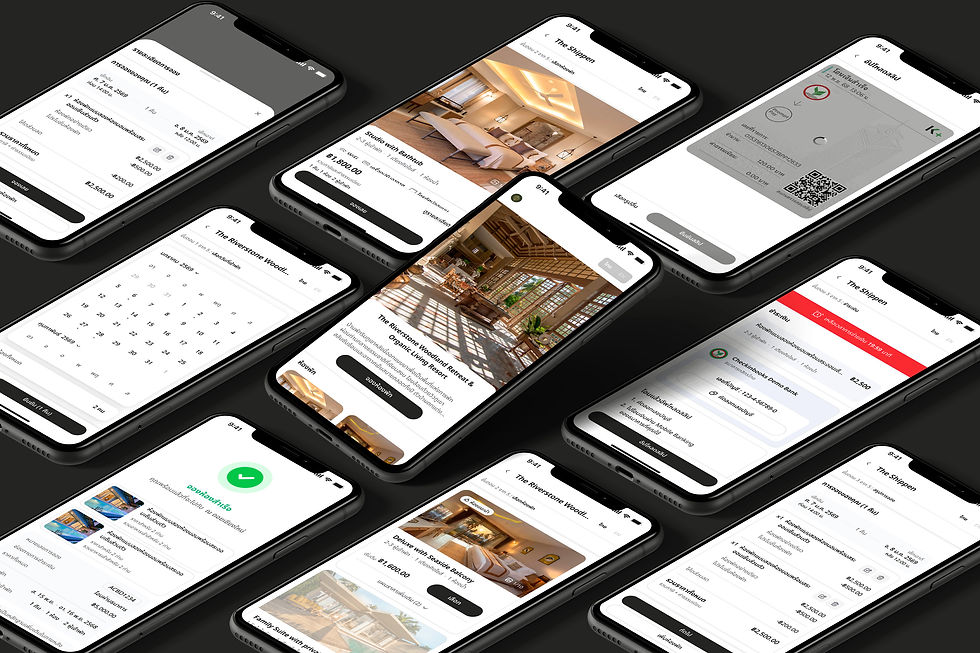
The Checkin Books Direct Booking (CIB) is a direct booking product that enables guests to make reservations directly through a property's own website. Designed for hotels, homestays, hostels, pool villas, and other accommodation types, it helps property owners accept commission-free bookings and share booking links with potential guests after they have agreed to stay. With a simple and user-friendly booking experience, Checkin Books makes direct reservations easier for both guests and property owners.


About Checkin+
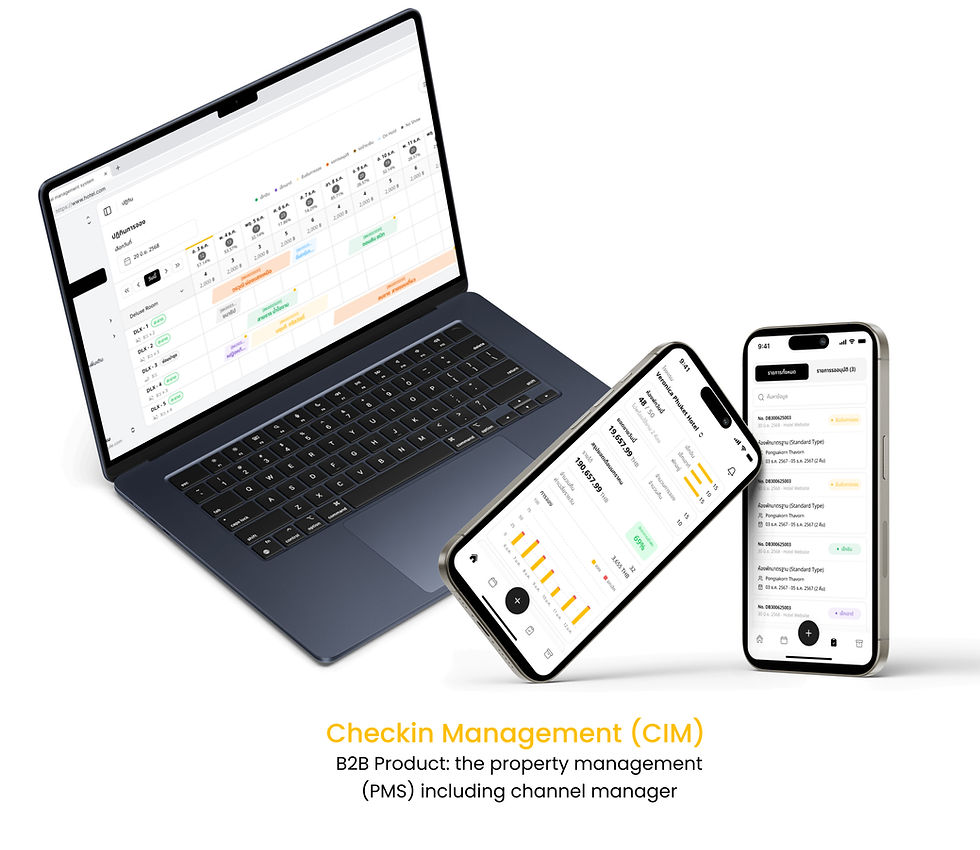
Checkin Plus Travel is a tech startup that leverages technology to help Thai property owners manage their operations and reservations. The company provides solutions for both B2B and B2C markets, offering various tools to simplify property management, including a Property Management System (PMS), Channel Manager, and a Direct Booking Engine.


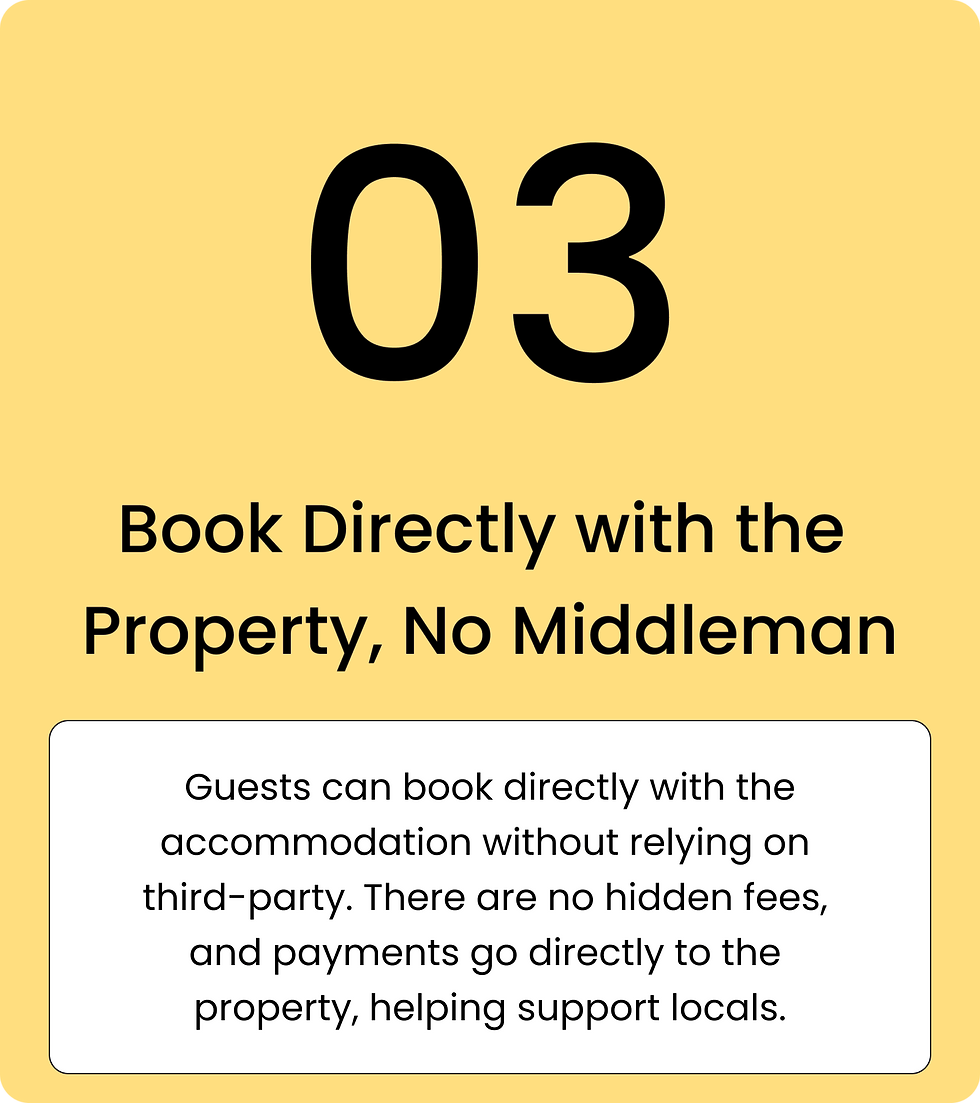
Checkin Books (CIB) is Checkin Plus Travel’s direct booking product that enables guests to make reservations directly through a property's own website. It enhances the guest booking experience through three key benefits:
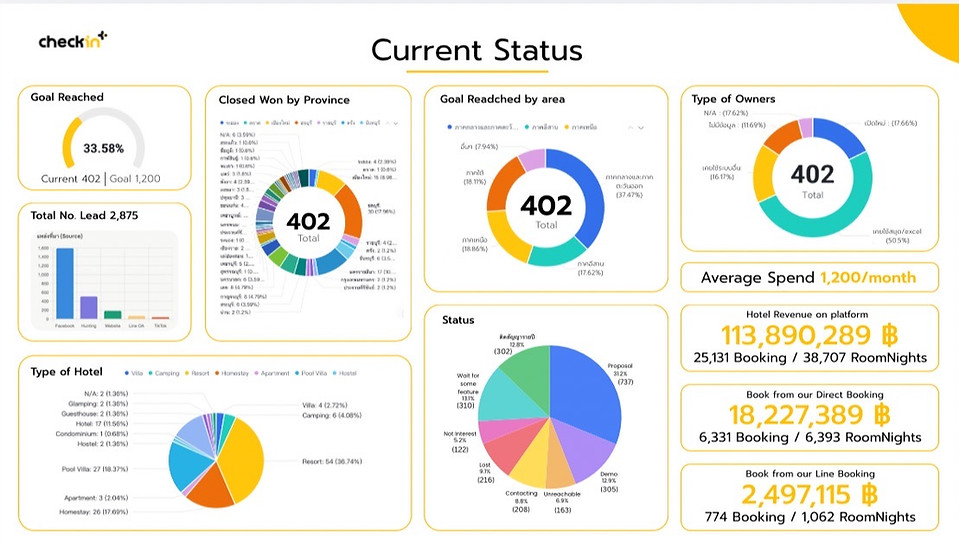
(Overall Checkin Plus’s Project Value Status)
Problem Issue
Problem 01 — Lack of Trust & Property Identity
The Property Landing Page did not clearly establish that guests were booking directly with the property. Room types appeared immediately, but there were limited visual cues to confirm the property's identity or authenticity. This could create uncertainty, especially for guests who were concerned about whether the page was a legitimate booking channel.
Problem 02 — A Complex Booking Flow
The booking flow was not intuitive enough for a wider range of users, particularly middle-aged and older guests who were comfortable using essential digital services but less familiar with complex booking interfaces. Multiple steps and interactions made the reservation process feel more difficult than expected.
Solution
I redesigned the reservation flow and refined parts of the information architecture in the original Checkin Books (CIB) booking experience to create a more intuitive and trustworthy user journey.
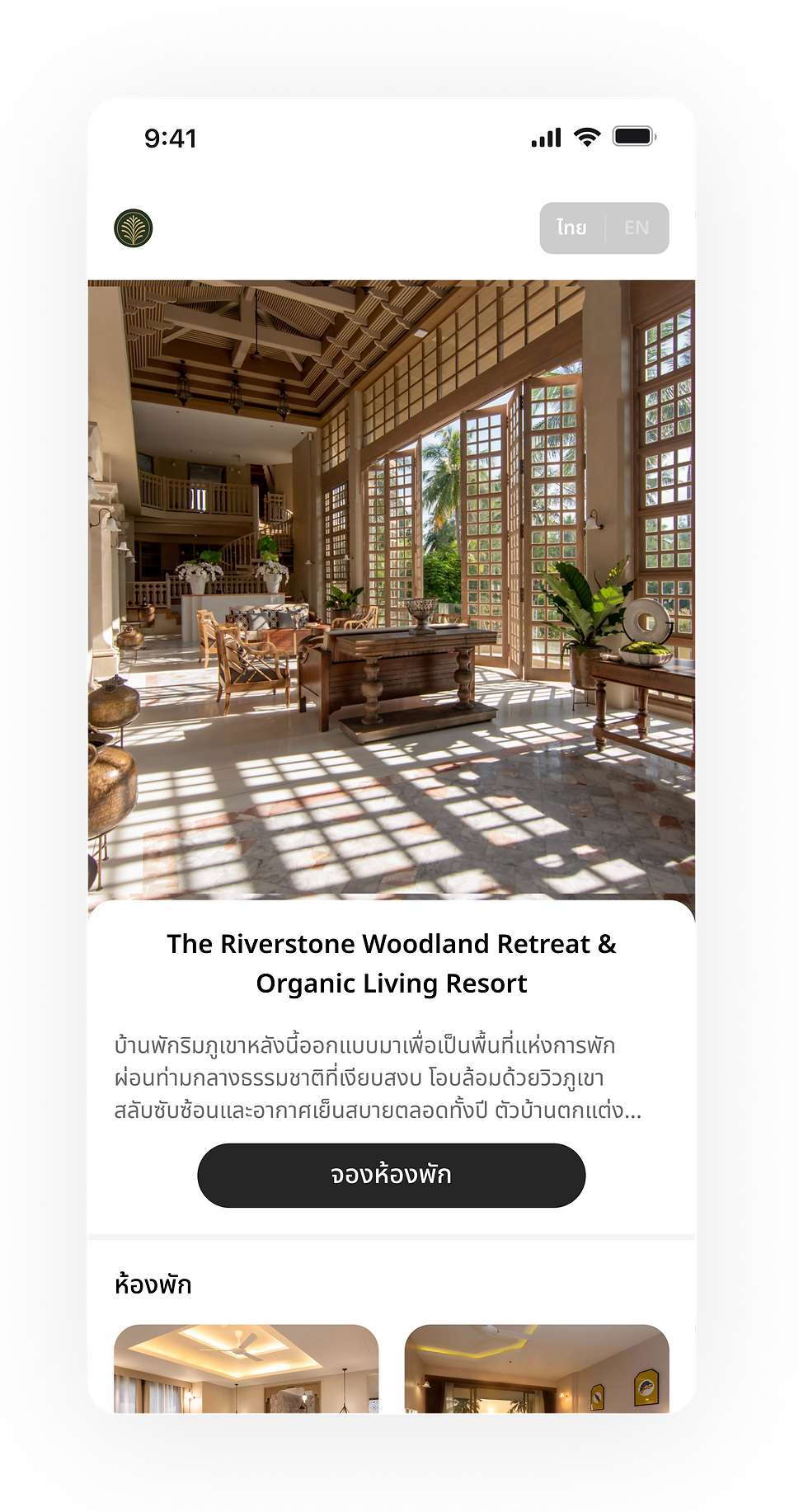
Confident Property Landing Page
Designed a clear and informative property landing page to reassure users that the accommodation is legitimate and trustworthy before they proceed with the booking.
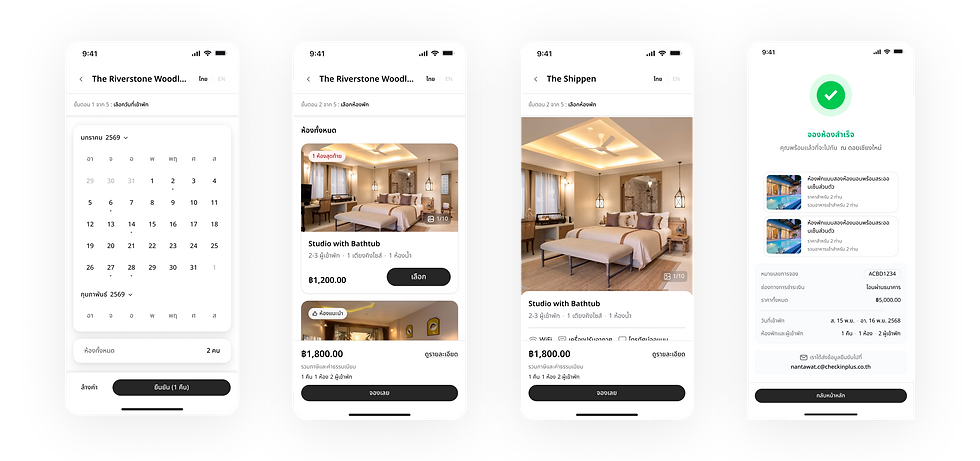
Obvious Booking Confirmation Page
Created a clear and prominent confirmation page to reassure users that their reservation has been successfully completed and that their room is secured after payment.
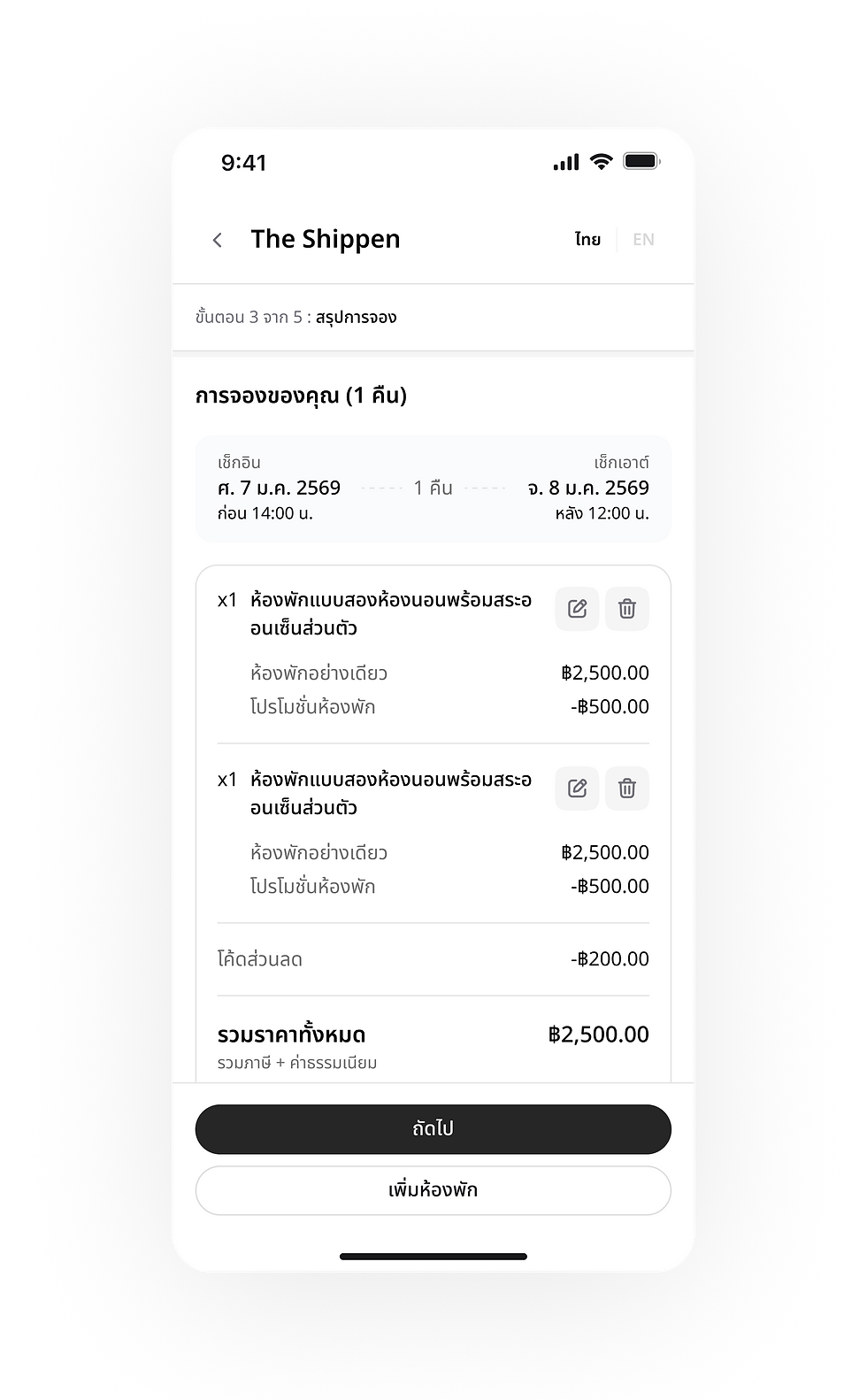
Effective Navigation Through CTA Buttons
Guided users through the booking process with clear CTA buttons, creating an effortless and intuitive experience for users of all ages, especially older adults.
Evaluation
1. Landing Page
The existing landing page prioritised room discovery over property identity. Since guests were immediately presented with room types, there were limited cues to confirm that the page was directly connected to the property they intended to book, potentially reducing trust and confidence.
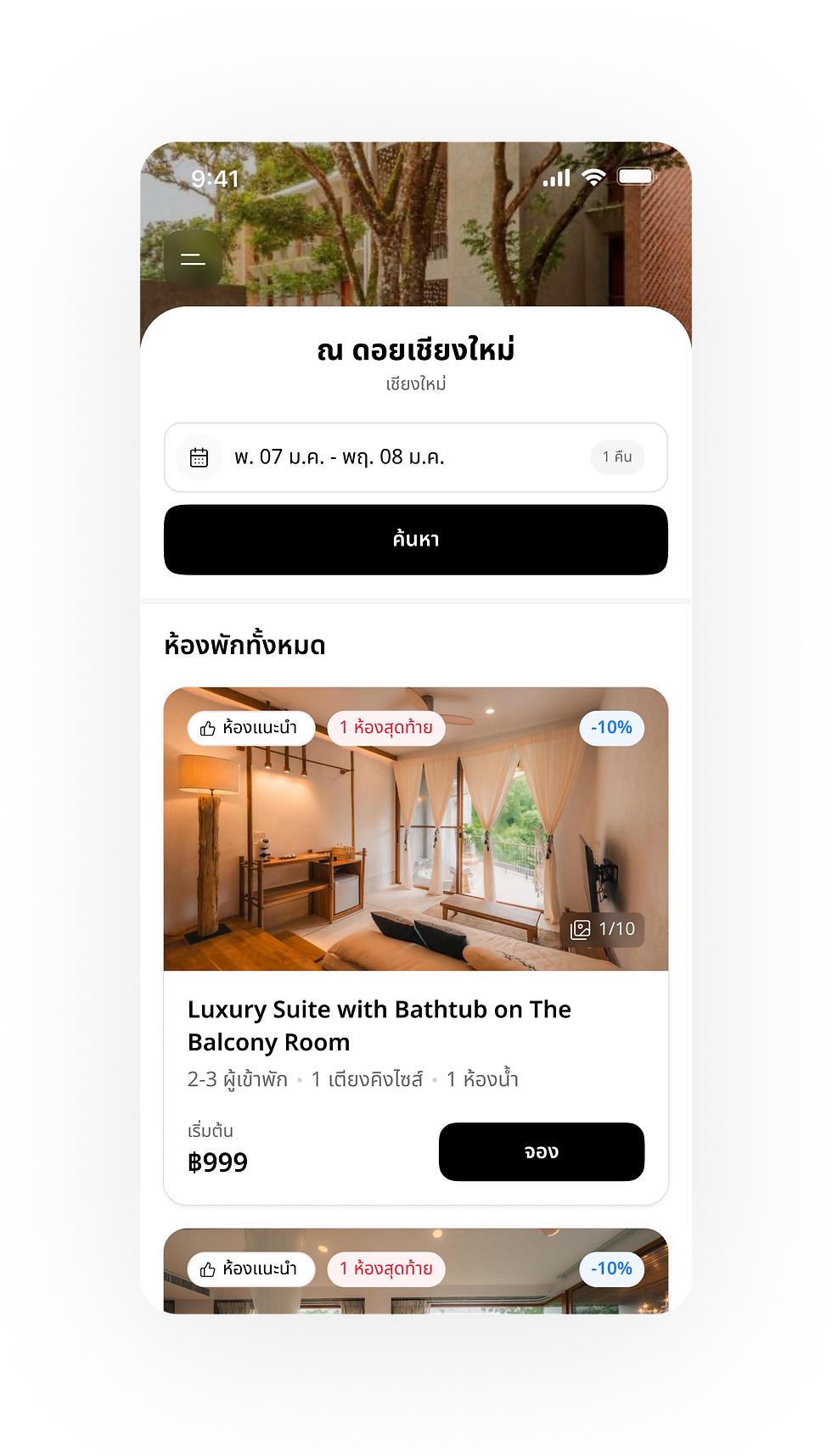
2. Room Type Selection
The page lacked clear context and direction. Guests may not realise that the displayed rooms are based on their selected dates, or that the date field can be changed. Unclear CTAs between “Details” and “Select” also made the next step in the booking flow ambiguous.

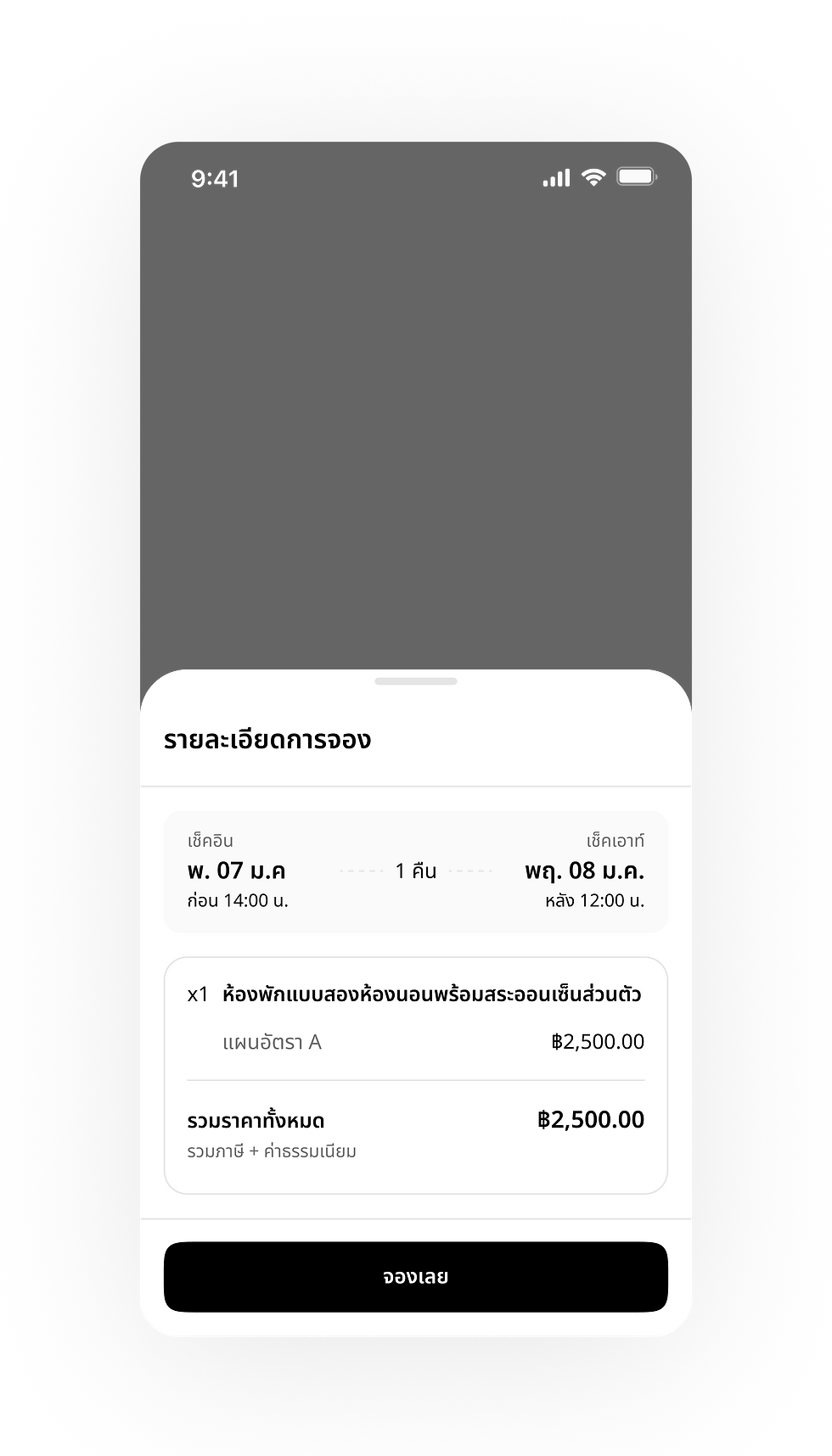
The booking summary was hidden behind a small action in the sticky footer, making it easy to overlook. Without a clear confirmation step, guests may feel uncertain about their selected room, dates, and total price before proceeding.
3. Booking Details
4. User don’t know how many steps in the booking process
1. Landing Page
2. Room Type Selection
3. Booking Details
Project Goal
According to the improved Checkin Books (CIB) booking flow, this project aims to create a seamless and user-friendly reservation experience for users of all ages, especially older adults, while increasing confidence through a clear and reliable booking process.
Persona

Mental Model Flow for this evaluation

Problem Statement
How Might We improve the seamlessness of the direct booking process by designing a booking flow that enables users to complete reservations quickly and effortlessly while ensuring they feel confident that their rooms are successfully secured. This would help users book with greater confidence and a smoother overall experience.
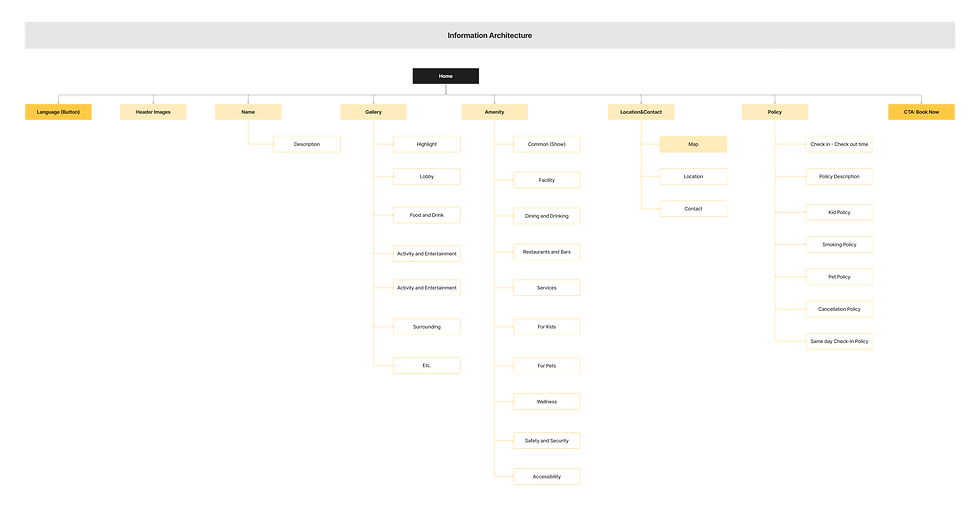
Information Architecture
Restructure the Landing Page Information Architecture which is the most important page to build the trust for user
.jpg)
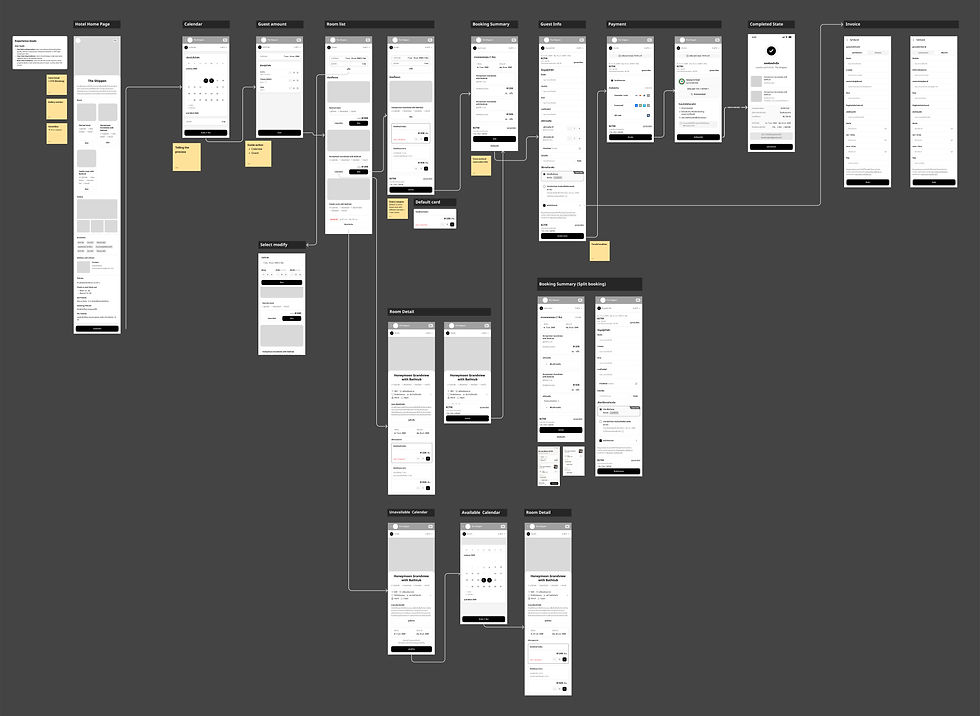
Wireframe
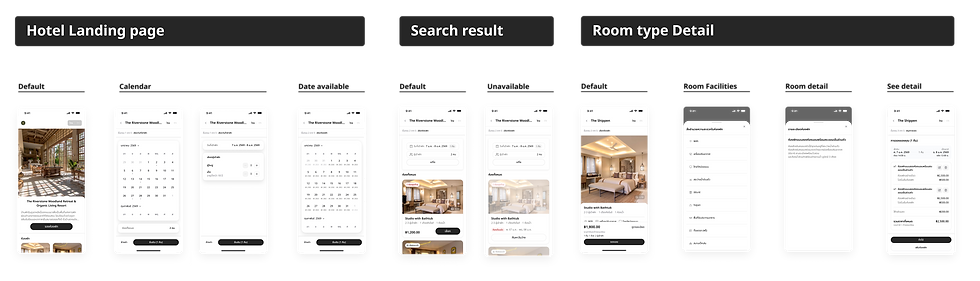
After gathering requirements from the project manager and business analysts, as well as researching existing direct booking flows, I improved several features in the original booking experience. The overall booking journey is divided into eight main steps:
-
Property Landing Page
-
Landing Page
-
Search Availability
-
Select Room
-
Review Booking Summary
-
Guest Information
-
Payment
-
Booking Confirmation
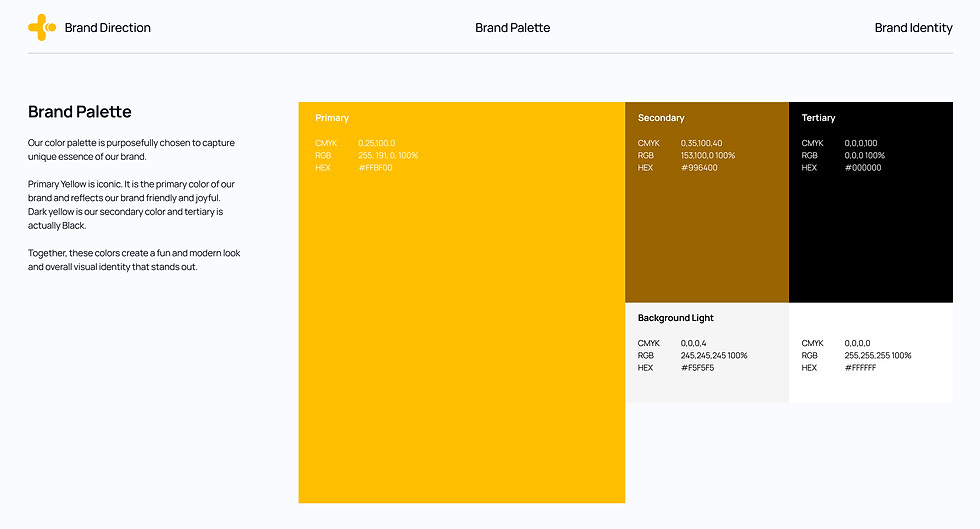
Design System
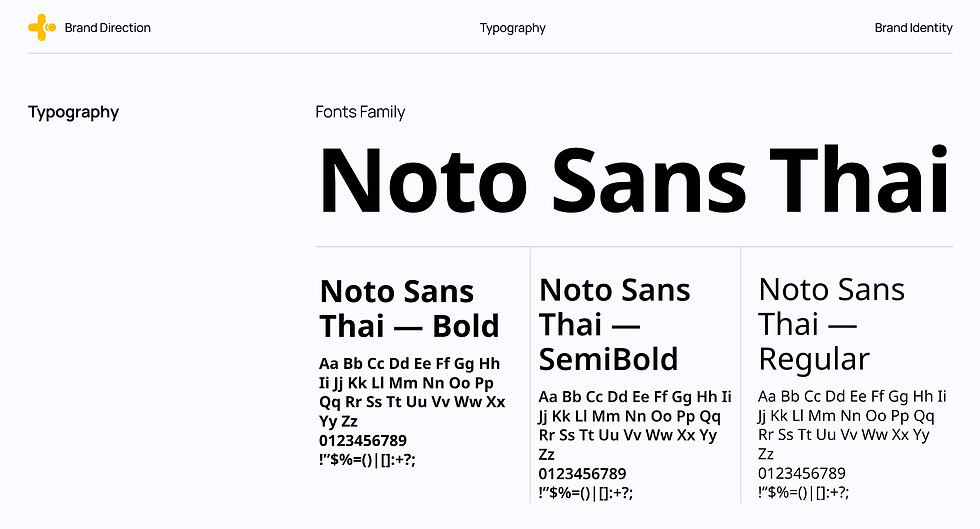
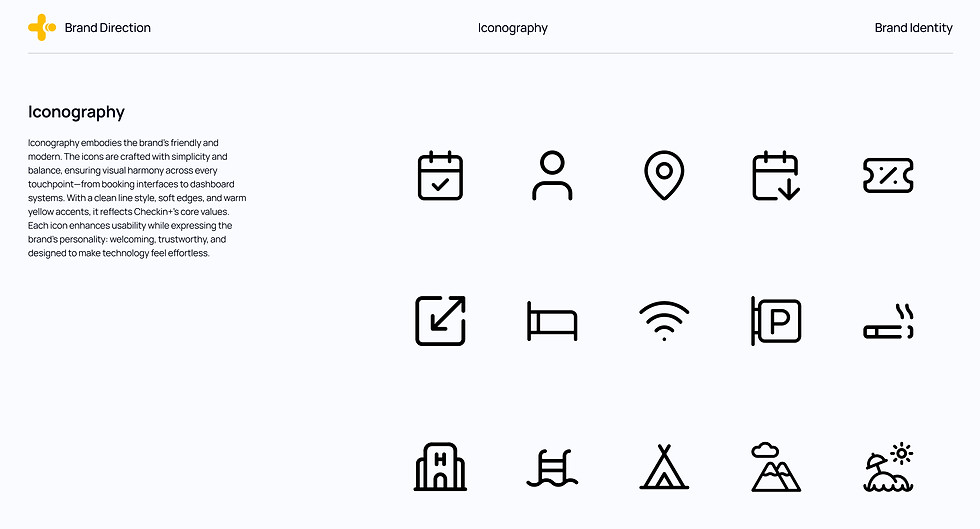
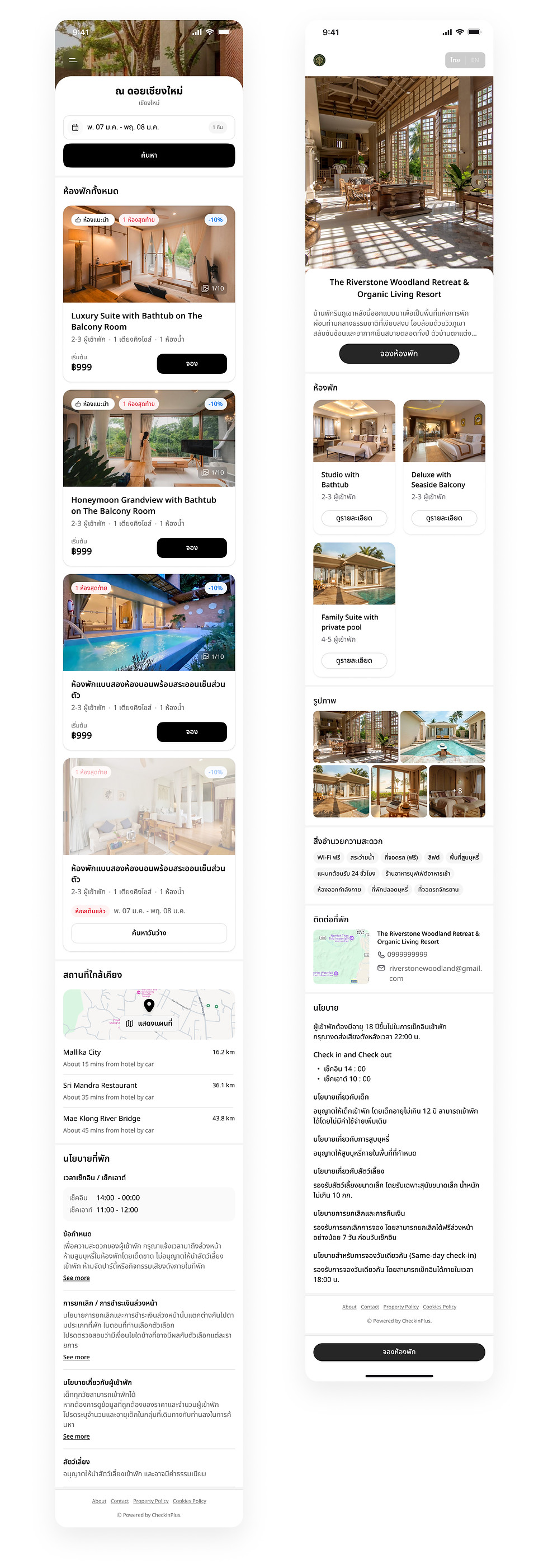
User Interface
Before
After

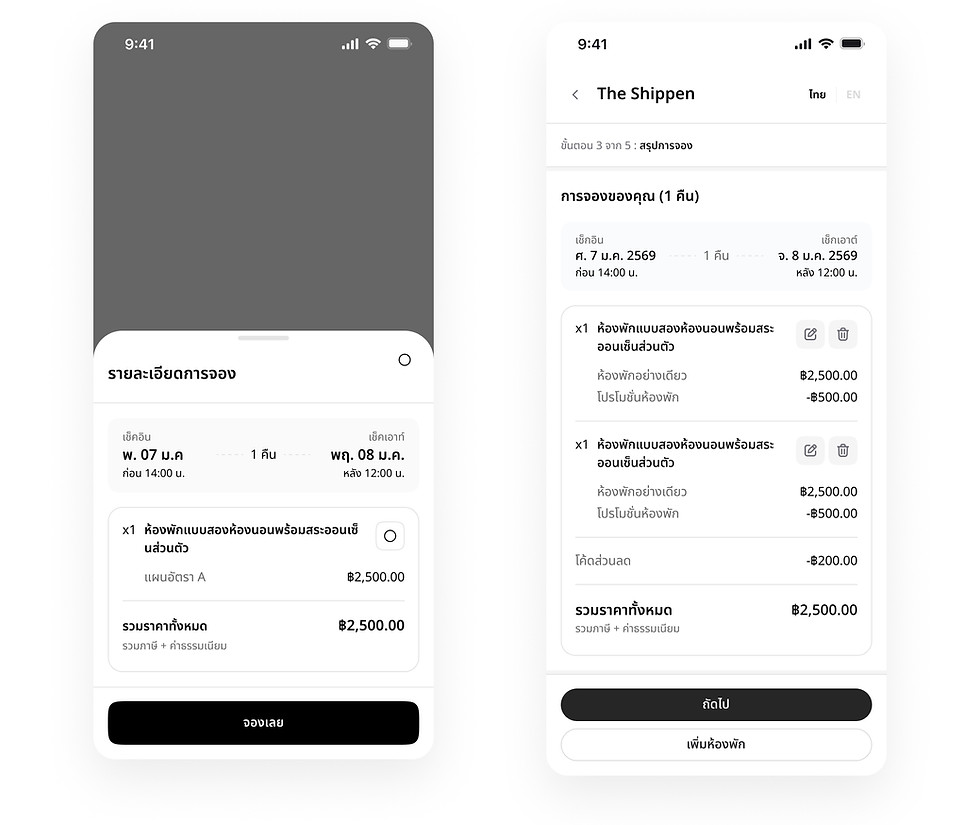
User Interface (All Flow)
